Our second and last day in Lagos we walked from Jardim da Constituicao to the few beaches we passed by along the way-
Praia da Batata
Praia dos Estudantes
At Praia dos Estudantes, you will find the famous Lagos Roman Bridge and few caves and beautiful rock formations. You can also take a break at Bar Restaurants & Bar with the beautiful view of the beach.
After our long walk, we continued our journey of the day towards the main town and we passed by the Castle Walls and the first Slave Market in Europe.
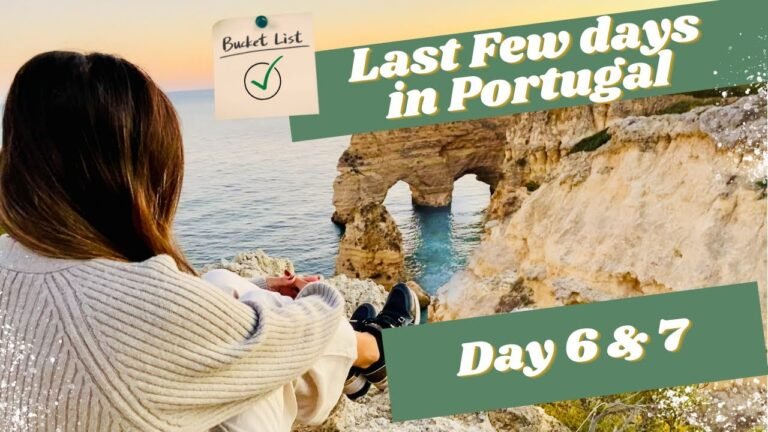
We had lunch at Restaurant Fernando and we headed to Praia da Marinha where we found the HEART of THE ALGARVE! It was stunning!!
The heart-shaped rock formation as some refer to the heart of the Algarve is part of Praia da Marinha – a beach in the South Algarve between Albufeira and Portimao. To be very precise the heart actually shows a rock formation just off-shore of Praia da Mezquita (Oeste). However, you can’t get there directly and have to start off at Praia da Marinha.
Overall, we love the Algarve but we fell in love with Lagos. So a little history-
Lagos is located on a sandy bay overlooking the Atlantic ocean. Due to its geographic position, Lagos became the port of importance during the Portuguese age of exploration before the rise of Lisbon. The city itself is built on the west side of a river inlet in which the modern marina/port is located.
A popular coastal resort town on Portugal’s crowded southern coast, Lagos serves as a gateway to the stunning Algarve region and understandably so! The whitewashed buildings of the old city may give it a quaint – regional feel, yet what may seem like a small city to today’s tourist has played an oversized part in the development of maritime Portugal, one of the great colonial powers of the era.
The name of Lagos is derived from that of a Celtic settlement. Little is yet known of this era and as such I will refrain from expanding on this era in the city’s history.
Lagos stay: Lagos Center Studios
Lisbon stay: Wallis Rato
source